With the emotions surrounding the Atlanta Falcons’ embarrassing and debilitating loss to the Green Bay Packers in the rear view mirror, it is time to look back and take stock of the year the team had. I’ll be splitting this review into two separate columns: the first dealing with the 13-3 regular season, and the second dealing with the one-and-done disappointing post-season.
It's safe to say that the Atlanta Falcons’ regular season exceeded all fans and pundit’s expectations, which were fairly low. The illustrious Peter King of SI.com had the Falcons missing the playoffs at 9-7, finishing third in the NFC South behind New Orleans and ahem, a Carolina Panthers team led by QB Matt Moore, who Mr. King felt was the next big star QB, potentially better than Matt Ryan. Feel free to take a good, long, laughing break here…
… Okay, done yet? Oh, you need some more time? Good, so do I…
… aaaaaaannnnnddddd, Done!
Great, now that we’ve had a good laugh, it must be said that while many sportswriters were wrong in underrating the Falcons this year, there were two lone souls who felt that the Falcons would make the playoffs after the 2010 season: Stand up and take a bow, Mike Silver of Yahoo Sports, who has loved Matt Ryan from day one, and Pete Prisco of CBS Sports. Not only did Mr. Prisco see a good season for the Falcons, he actually predicted them to win the NFC. While Pete correctly predicted Atlanta to win the NFC South, something just about no other sports writer had the cajones to do, unfortunately for Pete and many, many Falcons fans, the team didn’t even make it out of their first game in the Georgia Dome. In fact, some think they didn’t even show up for the game at all.
While it can correctly be surmised that the Falcons had a surprising season, considering they began the year watching the Saints win the Super Bowl, the team was actually set-up for regular season success by a head coach in Mike Smith who, like Marty Schottenheimer before him, took a team with a middle of the road schedule and micro-managed the offense and defense until they were as vanilla as possible to avoid the big mistakes. In going the Martyball route, Smith’s team wound up having an outstanding year (13-3), committing the league’s least amount of penalties and fifth-least amount of turnovers.
As these grades cover only the 2010 NFL Regular Season for the Atlanta Falcons, expect them to be very good, for the most part, and not reflective of how the Falcons’ season ended in a most egregious manner this past Saturday. Those grades shall be coming this week in my very next column, so you, gentle reader, won’t have to wait long.
HEAD COACH A
Mike Smith won’t be in any of the media's picks for Coach of the Year (wait a tic, he was given a COY award? Who knew? Congrats, Smitty!), as the media basically ignored the Falcons’ regular season accomplishments all year, but he deserves to be awarded for how his team performed in the won-loss column. Mike Smith did a tremendous job week-in-and-week-out in keeping his team on an even-keel, never letting them get too high after a win, nor too low after a loss. Smitty has a 24-hour rule for his team: You can enjoy a win or bemoan a loss, but only for 24 hours; after that time-frame, it’s time to get back to work. While I don’t necessarily agree with the end results that Martyball typically bring a team, for this season, Smith’s ultra-conservative, micro-managed, and vanilla approach to team football worked. The Falcons only lost one game in the regular season by more than a single score (at Philly), and that in and of itself is an amazing fact. However, the Martyball cracks were there to be found if you looked close enough, in all three losses. If the Falcons were a more daring offensive or defensive football team, and were aggressive, especially on offense, the team might’ve finished the year with only a single loss. As it is, Mike Smith must be commended with how his team finished their 16-game schedule as the NFC’s number one seed.
Best Moment by the Head Coach: Going for two fourth-down conversions in a row in the SuperDome against the New Orleans Saints, setting the tone for one of the few Sundays that the Falcons were the aggressor on the field.
Worst Moment by the Head Coach: With four minutes left in the game against the Saints at home on Monday Night Football, with the whole nation watching, Smith took the ball out of his Pro Bowl QB’s hands on 4th and 6th and punted to Drew Brees. What’s worse, Smith defended this boneheaded, Schottenheimer-eque decision that cost his team the game for the rest of the week instead of admitting he blew it.
OFFENSE B Minus OFFENSIVE COORDINATOR C Minus
Why a B Minus for a team that finished the regular season fifth in the NFL in scoring? Because the offense also finished SIXTEENTH in the league in total offense. Check out the statistics here. In my book, finishing sixteenth in the league in total offense means that your offense is either a) mediocre or b) has underachieved. Put me down for b). This Falcons’ offense, with FIVE Pro Bowl Starters (and two other Alternates), thoroughly underachieved during the regular season because Mike Smith had Offensive Coordinator Mike Mularkey draw up the most uncreative offensive game-plans by any team in the league by a country mile. The Falcons rarely strayed from the Martyball stereotype of run, run, pass, and it is because of this vanilla scheme that the Falcons were able to wear down the lesser teams on their schedule by the fourth quarter, such as the Bengals, Cardinals, Panthers, and Browns, but had them struggle to beat the better teams on their schedule, such as the Saints, Bucaneers, Packers, and Ravens. In fact, it can be argued that Mike Smith’s propensity to go for the most fourth down attempts in the NFL this year was not due to any particular daring of a head coach who is decidedly not daring, but because the team needed to convert so many fourth downs just to win games when their offense was bogged down in predictability. In fact, where the Falcons are assumed to be strong, they are only so because of repetitive action. The Falcons’ rushing game was deceiving all year in that yes, Michael Turner finished as the NFL’s sixth-leading rusher, but he finished first in attempts (leading to a palty 85 ypg average). You’d expect a team that rushes the ball most in the league to have the NFL’s leading rusher, and have that rusher average at least 100 ypg, but that wasn’t the case with the Falcons. Matt Ryan, the offensive line, and Roddy White, on the other hand, were the three components of the Falcons’ offense that didn’t underachieve this year. Ryan was the third-least sacked QB in the league, had a 91 QB-rating, and finished the season with a better than 3-1 TD-to-INT ratio, better than Brees, for example. Roddy White led the league in yards and receptions, setting team record in both categories, and while this is a great accomplishment, it can be argued that White did so because the rest of the Falcons’ receivers were so poor. In fact, the Falcons only had one offensive play of over 50 yards, a run by Turner. Mike Mularkey’s offensive game-plans and play-calls within the game were so conservative, the longest pass-play was a TD-pass to White for 46 yards. Boiling everything down: where the Falcons were so disappointing on offense is the fact that they never dominated teams on offense the way a 13-3 team should. Smith’s Vanilla Mandate, and Mularkey’s inability to find creative solutions around Smith’s conservatism prevented them from dominating any team on offense. And no, the Panthers do not count. Martyball strikes again.
Best Moment by the Offense: At the end of the San Francisco game at home, Ryan threw his worst regular season INT of the year to Nate Clements, but Roddy White ran Clements down, causing a fumble that Harvy Dahl the RG jumped on, setting up one of the more dramatic Matt Ryan comeback wins of his first three years (of which there have been thirteen).
Worst Moment by the Offense: The whole offensive game-plan for the Monday Night Football game against New Orleans. There was no aggression; there was no creativity. There was nothing but running Michael Turner into 9-man fronts with only seven or eight blockers ALL NIGHT LONG. Smith and Mularkey wouldn’t even let Ryan audible out of those situations. It was the worst case of coaching scared I’ve ever seen in a football game, and was a portent of future doom for the Falcons in the playoffs.
DEFENSE B Minus DEFENSIVE COORDINATOR B Plus
Why do I hand out a B Minus grade for what may be the Falcons’ weakest phase of the game? Because they overachieved like nobody’s business. And they overachieved in large part due to the coaching of Brian Van Gorder, hand-cuffed as he was by Mike Smith’s team-wide Vanilla Mandate. Where Mike Mularkey never found, or tried to find, a creative way around this mandate, BVG did everything he could to take chances when allowed. BVG is also credited for keeping and grooming undrafted free agent cornerback Brent Grimes, the unit’s MVP. The Falcons’ finished the season exactly as the offense finished the season, 16th in total defense and 5th in scoring. Where stats point to an underachieving offense due to the core talent on that side of the ball, they point to a defense that was low on talent, yet big on a no-quit-attitude that emulated Van Gorder’s tough demeanor. The Falcons play a basic 4-3, with a two deep zone coverage scheme. Unlike the Tampa 2, the Falcons would rarely blitz or take any real chances at all, keeping all pass plays in front of their coverage. Because the Falcons rarely got a pass rush out of their front four, QB’s threw on them at the 10th-worst pace in the league. Where the Falcons excelled on defense, in points allowed, showed that from the 20 to the 20, the team gave up a ton of yards, but once inside the red zone, they were one of the stingiest teams in the league. It must be said that the Falcons’ defensive philosophies are a reflection of head coach Mike Smith and not of Brian Van Gorder, who ran a 4-3 defense at the University of Georgia that was similar to the aggressive, opportunistic defense run by Greg Williams, the defensive coordinator of the New Orleans Saints. The uncreative defensive schemes run by the Falcons are a mirror-image of the offense. It's Martyball for defenses. Standouts on this side of the ball are few, but Brent Grimes and his 5 INTs and league-leading 28 passes defended, lead the way. SS William Moore also finished with 5 INTs to tie for the team lead, and although he’s the team’s hardest hitter he had a fairly inconsistent season, yet should improve in 2011. The Old Faithful of the Falcons' defense remains MLB Curtis Lofton, and the comeback defensive Falcon is John Abraham, whose 13 sacks lead the team and was fifth in the league. The Falcons' defense was a unit patched together by chicken-wire and duct tape. Where the Falcons succeeded this season on defense is the fact that during the regular season, they were not dominated by any offense they played against (well, except for Philly). For this, they must be commended.
Best Moment by the Defense: The play of the defense in the Monday Night Football Game against the Saints was so atypical of the Falcons this season it must be mentioned, even if the team lost the game. The defense hounded Drew Brees all night, creating two momentum-shifting INTs that Mike Mularkey refused to take advantage of through sheer uncreative stupidity. The defensive gameplan BVG cooked up for this game was reminiscent of his best UGA defenses: creative, aggressive, and unrelenting in pressuring the QB. The fact that Smith put his vanilla stamp on the defense three weeks later is unfortunate.
Worst Moment by the Defense: In a defensive struggle against the Pittsburgh Steelers that went to overtime in week one, the defense largely played their hearts out, but on the Steelers’ first offensive play of overtime, the Falcons had their worst play of the year: a 50 yard Rashard Mendenhall run for the winning TD. It came down to gap assignment, with a OLB who shall remain nameless missing his assignment, allowing Mendenhall to get to the edge and run for the score.
SPECIAL TEAMS A Minus ST COORDINATOR A
The only thing keeping the Falcons from an A grade on special teams were their early season struggles in punt and kick coverages, particularly in the home game against Tampa, that enabled teams to hang around by giving them short fields. The Falcons’ ST Coordinator Keith Armstrong took care of these problems by reinserting Kroy Biermann back into the Special Teams, and reconfiguring how they would attack the new wedge-less return schemes (as the NFL banned the wedge formations to keep gunners safe from injury). The changes worked, and the Falcons excelled in special teams for the rest of the year. The Falcons were second in the league in kicking and first in kick returns. Matt Bryant finished sixth in the league with 28 field goals made and a 90% made kick percentage. After all of the personal tragedy in his life, having him turn his career around in Atlanta the last season and a half has been one of the better, quieter stories in the NFL. The ST MVP is without a doubt Pro Bowler Eric Weems, who is the first Falcons player to take both a punt and a kick to the house in the same season. But even more than his return ability, Weems is also the team’s best gunner, seemingly coming out of nowhere on a regular basis to pin dangerous kick and punt returners behind the 20 with an outstanding tackle or assist. Weems was the Falcons One Man Special Teams Wrecking Crew.
Best Moment by the Special Teams: I’m sure most people would consider Weems’ epic return against the Tampa Bay Bucaneers in Tampa, he ran through about a dozen tackle-attempts for an amazing TD return, to be the pick here, but it isn’t. Instead, the best moment for the Falcons on Special Teams this season occurred at the end of the Ravens game in the Dome. Matt Ryan had driven the Falcons down the field for the go-ahead touchdown, but left about 45 seconds on the clock. After the ensuing kick-off, the Ravens would have time left for a touchdown drive of th– right up until the moment Eric Weems raced down the field and tackling the Ravens’ returner inside the 15 with an outstanding flying tackle. Yeah, it happened that fast, just like that, like in the middle of a thought, between the firing of a synapse, Weems rendered any Ravens comeback moot with the Falcons ST play of the year.
Worst Moment by the Special Teams: The whole of the aforementioned Tampa Bay game in Atlanta. Just an all-around pitiful effort that let the Bucs hang around the game for far too long, with backbreaking return after backbreaking return, including a 90-yard TD return after a Falcons score. The less said, the better.
In the end, the Atlanta Falcons were a team that was better than the sum of their parts. They won conservatively, and made their own breaks by not making the killer mistakes, for the most part. Based on talent alone, this was probably a 10-6 or 11-5 team that finished a bit over their heads at 13-3, and unnecessarily put their QB into too many game-saving situations because of their head coach’s insistence at coaching and playing Martyball, as opposed to being the aggressor on the field on offense and defense.
I know it seems like I am frequently coming down harshly on Mike Smith's preoccupation with ultra-conservative team play (and yeah, I am), but remember, I did give him an A grade because even though faults can be found with the Martyball philosophy, those faults generally aren't exposed until the postseason. As it is, the team finished 13-3, and Smith is to be commended for overseeing a team that finished the regular season as a number 1 seed.
The next column will grade the Falcons on their postseason, even with the limited tape available to me. After that, expect a column detailing what the Falcons must do (in an over-arching sense) in the off-season to improve their football team and truly contend for a Super Bowl.

 Matt Ryan - As you may already know Matt Ryan is close to being an elite QB in this league. He has that swagger that everyone talks about, he has the composer, he has all the intangibles to lead his team into the playoffs (oh ya, he already did). He has only lost 3 games at home as a starter. He only had 9 interceptions against his 28 TDs. He will be an elite QB, and it might start next season.
 LeSean McCoy - McCoy didn't have the best of seasons in 2009, partly because he was a rookie. This season McCoy had a break out season of sorts. He averaged about 111 all-purpose yards a game. He was probably the reason why the Eagles were better than expected, right next to Vick. With the off season for the Eagles, he will be able to come back better, stronger, and have more elusiveness.
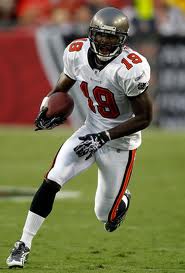 Mike Williams - I usually don't like to call players up-coming in their first year, but I am with Mike Williams(TB). He almost didn't even seem to look like a rookie. He looked like player that had been in the league a couple of years. He was second in receptions in Tampa Bay only behind Kellen Winslow and first in receiving yards this season and probably will lead in both categories on the team next year.
 Brandon Pettigrew - At the beginning of the season Pettigrew was not a big factor in the Lions offense, but during the middle and end of the season he was a big force. He ended up being second on the Lions in receptions, only 6 receptions behind C. Johnson's 77. He had 772 yards receiving, also second on team behind C. Johnson in that category. He will be the main reason why the Lions will actually be good next year. The Lions will be my sleeper/surprise team next season.

